News Briefer is Live: A Morning News Briefing That Knows Your Organization
 Gianpiero Vecchi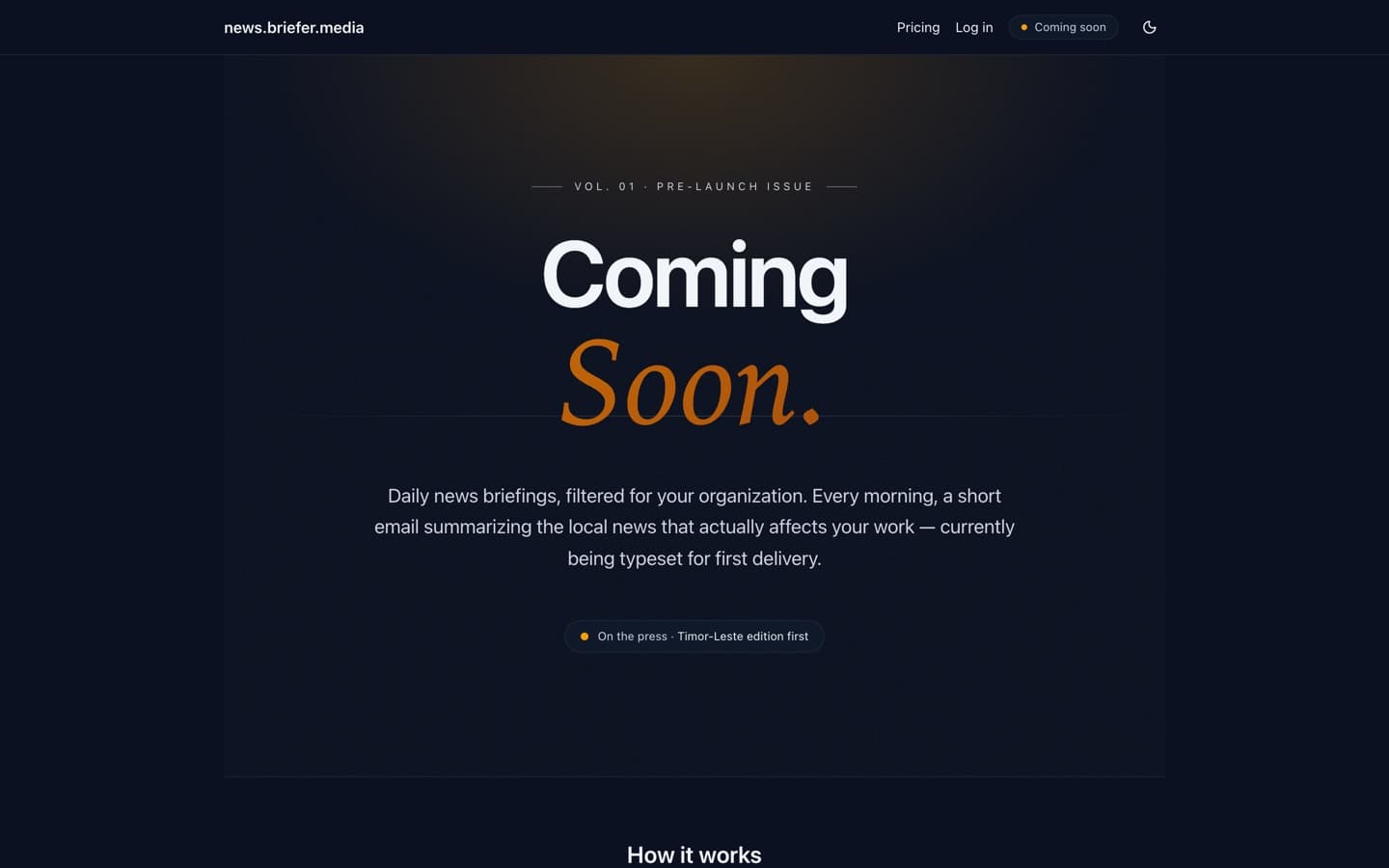
I've finally consolidated the news briefing service. After months of testing, tweaks, and improvements, it's now extremely solid and reliable.
But what is News Briefer? Put simply, it's a service that monitors the local press and media channels (for now in Timor-Leste and Laos) for topics your organization or company might care about, and condenses what it finds into a simple, effective daily newsletter.
It sounds trivial, but in practice it's a service that actually saves money. How? I've seen it firsthand: there are companies that dedicate staff (or hire outside agencies) to go through the newspapers and media channels, checking whether there's any news relevant to their business. The cost? Two to three hours of a person's time, every day (you can do the math).
News Briefer is automated, and it takes roughly 5 to 30 minutes depending on how much news there is and what kind: for videos it literally has to turn the audio into text, translate it from the local language, judge whether it's relevant, and write a summary. The savings are clear, and the service is improving day by day, drawing on experience and client feedback: better content quality, a better mix of sources. It also works weekends.
Here's a quick rundown of how it works:
How you set it up
You describe your organization once, through the admin panel: what you do, where you work, what you care about. You add the keywords worth watching and the people who should receive the briefing. That profile is what every story gets measured against.
What happens every morning
It starts with the sources. Each country edition has a hand-picked list of newspapers, portals, and broadcast channels, checked for reliability and quality before they go in. The platform does not crawl the open web; it reads that list and nothing else.
Every morning it downloads what those sources published overnight. Most of it is in the local language, so everything gets translated first.
Then the selection. Each story is scored against your organization's profile: the purpose you described, the interests you listed, the keywords you set in the admin panel. A food security agency and a construction firm can follow the same country and get two different briefings, because almost nothing scores the same for both.
What survives selection gets summarized. A second pass writes the briefing itself: short narrative prose, not a list of links to click through. Every story still carries a link and credit back to the original article or video on its platform, in case you want to go deeper.
The platform also remembers what it already told you, to avoid duplication.
It listens to the TV news too
Some of the most important local coverage never gets written down. It airs on the evening news and ends up on YouTube. For those sources, News Briefer downloads the video, transcribes the audio in the local language, translates the transcript, and applies the same selection criteria as the written press. A story that only exists as a broadcast clip can still be relevant.
What's in the box
- A hand-picked source list per country, vetted for reliability before anything gets read
- Translation from the local language, built in
- Story selection driven by your organization's purpose, interests, and keywords
- A short narrative email every morning
- Broadcast and YouTube coverage transcribed and filtered with the same criteria as text
- A searchable archive of every briefing you have received, on the service portal
Who is using it
The first edition covers Timor-Leste, and the United Nations World Food Programme there already receives its briefings from the platform. It has now expanded to Laos, and more countries are coming soon.
Try it
News Briefer lives at news.briefer.media. It is in early access right now, by invitation, starting with the Timor-Leste and Laos editions. If your organization works in either country and wants a briefing, write to me. If you want your country covered next, tell me which one.
As always, comments, suggestions, and criticism are welcome.